Kapkatet Wetland is a state-owned protected area, owned by the government and recognized as an important place for wildlife. It is home to the endangered Grey Crowned Crane (Balearica regulorum) as well as many plants, birds, and insects. Although the wetland is protected by Kenyan laws, including the Wetland Conservation Policy (2025) and the EMCA (1999), it still faces serious problems Agricultural encroachment, unsustainable overgrazing, invasive plant species, and pollution from tea plantations are harming the wetland. As a result, the biodiversity in the wetland, including the Grey Crowned Cranes, is at a real risk of decline unless focused conservation action is taken. Unfortunately, ongoing human activities have led to habitat fragmentation and a decline in habitat quality for wildlife and the surrounding community. The widespread spread of invasive plant species poses a major threat to the wetland, particularly eucalyptus trees, which may significantly deplete water levels over time. Moreover, high levels of pollutants in the wetland is threatening the survival of invertebrates, which are a crucial food source for the cranes.

The ongoing activities include profiling of the invasive plant species and areas with native plant communities within the wetland. Species identification and abundance will be done by recording the ground cover, height, and density of invasive species. GIS mapping of vegetation types will be done using satellite images and ground- truthing to assess spatial spread of invasive plants. The determination of species diversity and abundance of invertebrates within the wetland is also underway.

The current project aims at protecting the endangered Grey Crowned Cranes (Balearica regulorum) and their threatened habitat in the Kapkatet Wetland of Kericho, Kenya. By assessing the spread of invasive plants, which are a threat to wetlands, and invertebrate diversity, we will gather updated baseline data vital for effective conservation planning and management. Engaging local communities through awareness-raising, conservation education, and sustainable livelihood options will encourage their active involvement in protecting the wetland. To make a difference, the focus is on capacity-building initiatives that empower local conservation practitioners and wetland conservation groups and neighboring schools. This will equip them with the right knowledge and skills that will help them effectively monitor and protect the endangered species and its habitat in a sustainable way. The goal is to create a solid
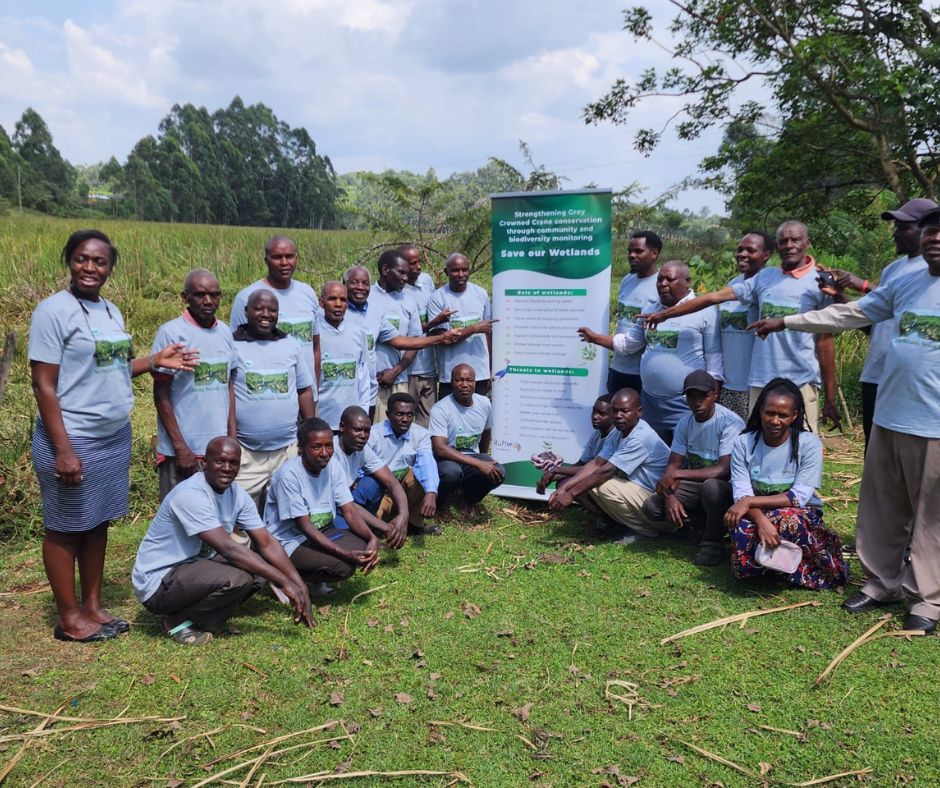
conservation strategy that brings together community efforts to tackle threats and ensure the long-term survival of B. regulorum. What has been done includes community awareness training on the significance of the wetland and the need to conserve it. Information dissemination materials (brochures, t-shirts) on
sustainable wetlands restoration, management and innovative livelihood options.

What is yet to be done includes conducting awareness in 4 school environmental clubs visit and 2 community forums at county government conference hall. Formation of a Community Wetland Conservation Committee (CWCC) made up of community members to connect with conservation partners.

Empowering Communities and Enhancing Biodiversity Monitoring to Strengthen Conservation of the Grey Crowned Crane in Kapkatet Wetland, Kenya